

I watched the documentary Fracknation last week and heard producer Ann McElhinney field questions afterwards. The event was co-sponsored by the UCSD chapters of College Republicans and Young America’s Foundation. Freshman Jonathan Natale responded to my request for a summary of the evening:
by Jonathan Natale:
On Thursday, April 11, the College Republicans at UC San Diego shared in the excitement of hosting Ann McElhinney, a nationally acclaimed investigative journalist who co-directed the film FrackNation, regarding the controversy surrounding hydraulic fracturing. 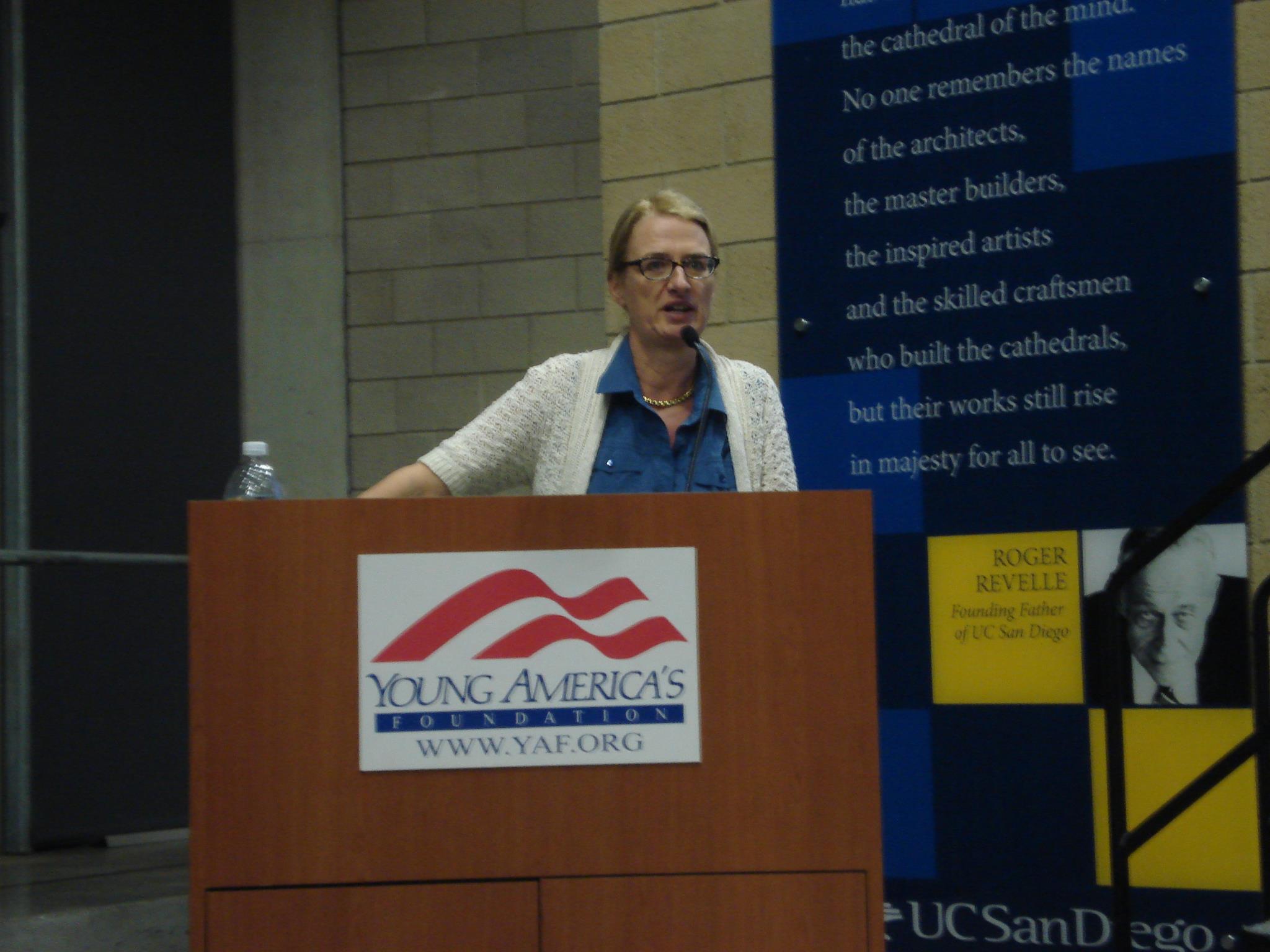
Hydraulic fracturing has been used in the United States since 1947 as a means of releasing oil and natural gas from impermeable rock approximately 5,000 feet below ground level. The technique has revitalized the economies in cities and even states across the U.S., with many employment opportunities in fracturing starting at $75,000 salaries, as is the case with the fracturing of the Bakken formation in North Dakota. Mrs. McElhinney pointed out the immense economic promise this type of resource development brings to communities across America: “It isn’t just the energy workers making more. Everyone is making more. Even McDonald’s is offering a $10,000 starting bonus in North Dakota.”
Natural gas burns about 50% cleaner than coal or other fossil fuels, and there’s enough of it to give America and Europe, as Mrs. McElhinney puts it, “energy security from countries who think stoning women and killing gays is an okay thing.”
So why is this controversial?
In 2010 documentary filmmaker Josh Fox directed GasLand, an anti-fracking film that claims there are alarming environmental concerns with fracking, specifically a high risk of water contamination. But when Ann and her husband Phelim McAleerresearched the correlation between fracturing and methane seepage in the water supply, the evidence appeared highly questionable to them. They came across five towns in the United States named “Burning Springs” by the Native Americans due to the naturally occurring methane in the water supply. In addition, scientists have found that water contamination is likelier from naturally occurring methane than fracturing, which occurs nearly a mile below the water level.
Thus, the inspiration for FrackNation was a confrontation between Phelim and Josh Fox at a Q&A for GasLand in Chicago. Phelim questioned Fox about the lack of acknowledgement of naturally occurring methane in the film. Fox’s response was “It’s not relevant.”
“Well we thought it was very relevant, so we decided to make a film,” declared Ann to a crowd of about sixty in UCSD’s Multipurpose Room, “[my husband and I] are in the business of telling stories that no one else will tell.” Ann touched on a variety of issues in her speech following the film screening. A former journalist for the BBC, she gave a personal account of her own dealings with the mainstream media and its politically motivated protection of environmentalists. “Greenpeace lie and get away with it. They tell stuff to The New York Times and it’s reported, just as if it were true.” About ten minutes into the Q&A, a member of the audience asked Ann’s opinions regarding the future of fracking in California. She responded, “You have a [big] opportunity here with the Monterey shale. I think that Jerry Brown is so excited about the money that he’s almost beside himself.”
The evening ended with a College Republicans group photograph with Ann and a DVD signing. Many audience members discussed their thoughts of the film with Ann and applauded her efforts to keep hydraulic fracturing alive across America.
Jonathan Natale is a first year college student from Pasadena, CA. He is majoring in computer science and is in the Eleanor Roosevelt College at UCSD.