



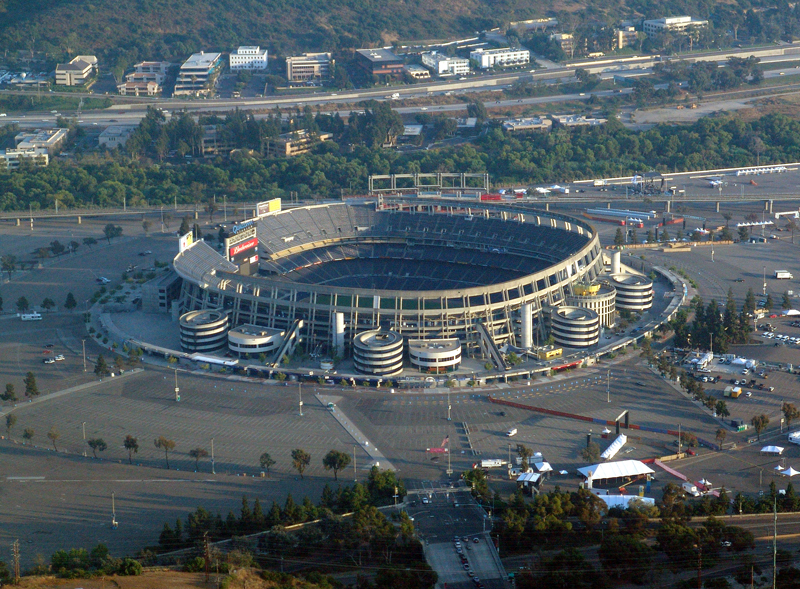

As long as the voters of San Diego are willing to punish politicians for subsidizing a new Chargers stadium, or as long as the law is interpreted that such subsidies require a public vote, there is no way that the Chargers can remain in San Diego for much longer. Numerous studies have shown that the value of a football stadium to a city is never more than the amount of money plowed into subsidies, so there will never be a viable economic argument for a new stadium, and I think San Diegans understand that. See Pacific-Standard for a great summary of the issue in general in America.
. . . from 2001 to 2010, 50 new sports facilities were opened, receiving $130 million more, on average, than those opened in the preceding decade. (All figures from Long’s book adjusted for 2010 dollars.) In the 1990s, the average public cost for a new facility was estimated at $142 million, but by the end of the 2000s, that figure jumped to $241 million: an increase of 70 percent.
. . .
Due to these oversights, Long calculates that economists have been underestimating public subsidies for sports facilities by 25 percent, raising the figure to $259 million per facility in operation during the 2010 season.
This only leaves emotional arguments about the value to the city of being in the “big leagues.” However, even with the Chargers threatening to leave, the latest polls indicate that the public is unwilling to subsidize the team to stay in San Diego, with 54% disapproving of using tax dollars to keep the Chargers.
The real problem is that politicians in most other states and cities are willing to ignore public opinion and provide tax payer funding to professional sports franchises. They do so, even when the public votes against ballot measures, like in Pittsburgh. In such an environment, the only way to win is not to play the game. But it means the Chargers have to go.