



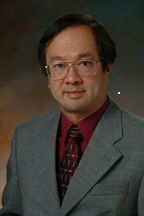
DeMaio presented key aspects of his familiar (at least to us local politicos) Roadmap to Recovery. He emphasized savings that could extricate the city from debt by instituting managed competition for some city services and reforming pensionable pay. His mantra “reform before revenue” seemed to fluster Zucchet.
Zucchet countered with no solutions at all. He did take issue with DeMaio’s chart showing only the next 15 years of increasing debt for the city. Zucchet did not take great issue with the 15 year projection itself. Instead he insisted that in year 16 the growing gap between liabilities and city funds falls off a cliff and virtually evens out over the following 15 years. In Zucchet’s view, if only DeMaio’s chart showed a 30 year view, then nobody would be pushing the panic button on pensions.

Zucchet believes the problems in the pension world hearken back to 2004 when San Diego voters passed Prop G. Back then the pension system used a 30-year term for paying down the debt. The passage of Prop G requires a maximum 15-year pay-down and ensures that principal reductions occur each year. In Zucchet’s view it is no longer having the ability to pay down the city’s debt over 30 years that is the primary problem–maybe pension spiking at the margins. Zucchet repeatedly compared his preferred method of city debt payment to a sensible 30 year home loan. He failed to mention, that unlike a 30 year home loan, this particular method of amortization doesn’t even cover the interest on the debt during the first 12 years, let alone apply anything to principal.
Zucchet directed most of his snarky comments to DeMaio (photo above), including an early one (clearly a joke) about possibly having his municipal employees tow DeMaio’s car outside. It was met with tepid laughter. In his rhetorical meanderings he mentioned that he thought $75K was too small a salary for a city councilmember because it often attracts people who are independently successful in the real world like DeMaio. Such people can just pursue “punitive” causes and “extreme solutions” like pension reform. He also argued that $75K was too high a salary because it attracted candidates who simply wanted a higher paying job than they currently have. Contradictory? Perhaps. But this former councilmember Zucchet solves the conundrum by saying that councilmembers should get paid more, like they do in other big cities. This would attract the right kind of councilmember candidates. His logic here is a bit like his amortization calculations. No one is quite sure how it works out.
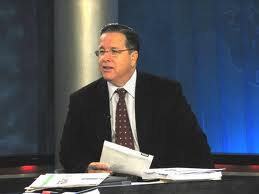
Michael Aguirre (pictured at left) is a proud “liberal Democrat” who promotes the idea of San Diego declaring bankruptcy so it can undo some its current pension obligations. He says you could “shrink the debt in bankruptcy court.” This idea has traction with some fiscal conservatives and even gained him praise in the Wall Street Journal in 2008. Aguirre came off as the Ralph Nader/Ron Paul/Ross Perot who crashed a two party system debate between a fiscal conservative (DeMaio) and a labor apologist (Zucchet). Even if you favored the bankruptcy method, you wouldn’t want Aguirre representing it for you. He regaled the audience with autobiography: Berkeley student body president, some connection to Cesar Chavez and other things. He went on about the tradition of Cesar Chavez, FDR, Woodrow Wilson and JFK. He mentioned FDR the most. He had populist lines he used in opposition to the machinations of “Wall Street derivatives.” He wants to shore up the pension system so people can nobly “devote their lives to public service.” He would hope that union members would not go on strike not so much for themselves, but “for the next generation”. In other words, he was all over the place.
Professor Alan Gin of University of San Diego made the cutesy and cliched observation that San Diegans want no reduction in services but no new taxes. He conceded that San Diegans are largely in favor of instituting managed competition to save the city money, which could then be used for services. He wants to see sizable trash collection fees and increased taxes on San Diego businesses. According to him, San Diego businesses are under-taxed, especially in comparison to California’s other large cities. He goes on to say that the “evidence shows” that if you taxed them more they wouldn’t go anywhere. Apparently he hasn’t heard of North Carolina’s Tech Triangle which poses an ever-present threat to the Silicon Valley. Maybe his evidence didn’t include the fact that more and more movies are filmed outside of the tax prison known as Hollywood, CA. Mostly it was curious that an economist was fixated on trash collection fees as a serious partial solution to an already unfunded liability of $1.5 billion. When professors fixate on silly things and seem ignorant of widely known facts (like California businesses–even “green businesses”–fleeing for warmer business climes such as Texas) it makes skeptical members of the audience wish the professor would just commentate on PBS… where they like soft, boring tones and “studies” that go against the grain of common sense and common knowledge.

Watching a debate about a local pension crisis is similar to watching a debate about reforming Social Security. The deficit hawk a la councilmember Carl DeMaio/ Congressman Paul Ryan wants reforms and no tax increases. The entitlement/union apologist a la Michael Zucchet/columnist Paul Krugman wants increased taxes–even though they swear up and down there is not an unfunded liability problem. Thus, there must not be a revenue problem. But they still want higher taxes. Huh.